


Sterling Silver Anklets: The Complete 925 Buying Guide
Sterling Silver Anklets: The Complete 925 Buying Guide
Almost every anklet sold online says “silver” somewhere in the title. Very few say what kind. That single gap is why so many buyers end up with a piece that looks beautiful in week one and turns dull, patchy or green by week six.
This guide is about getting that decision right. We will explain what sterling silver anklets actually are, how to test a piece before and after you buy, what the price should reflect, how to size one properly and how to keep it bright. Every design shown is from our own Anklets collection, in solid 925 silver.
What Sterling Silver Actually Means
Sterling silver is not a marketing word. It is a defined standard: 92.5% pure silver, with the remaining 7.5% made up of another metal, usually copper. That is where the number 925 comes from.
The alloy is not a shortcut. Pure silver on its own is soft enough to bend out of shape in a week of normal wear, which is no use for something that sits around a moving ankle. The small amount of copper gives the chain the strength to keep its form.
Sterling silver vs silver plated
A plated anklet is a different product entirely. It is base metal, usually brass or an alloy, with a microscopically thin coat of silver sprayed or electroplated on top. The silver layer wears through, and once it does, the piece cannot be restored. A sterling silver anklet can be polished for decades, because the silver goes all the way through.
What about German silver and silver-tone?
Both terms turn up constantly in Indian listings, and neither one means silver. German silver is a copper, nickel and zinc alloy with no silver content at all. Silver-tone simply means it has a silver colour. If a listing uses either phrase instead of 925, treat it as a plated or base-metal piece.
5 Ways to Check If an Anklet Is Really Sterling Silver

The quick checks worth running before and after you buy.
Look for the stamp
Genuine sterling pieces are normally marked 925 on the clasp, on a small tag near it, or on the fitting.
Run a magnet
Sterling silver is not magnetic. If a fridge magnet pulls at the chain, there is a magnetic base metal underneath.
Watch how it ages
Real silver tarnishes evenly and the dullness lifts with a polishing cloth. Plated pieces flake in patches.
Check your skin
Solid 925 silver rarely leaves marks. Green or grey marks usually point to base metal coming through worn plating.
Do the price maths
Silver has a market rate. If a 20-gram anklet is priced like a hair clip, the arithmetic does not work.

Solid 925 construction with adjustable sizing, currently 64% off.
Why Silver Weight, Not Design, Decides the Price
Buyers often ask why two anklets that look similar are priced differently. In almost every case the answer is weight. A heavier chain uses more silver, and silver is bought by the gram.
- Light daily chains use the least silver and sit at the entry level.
- Textured and link chains need more metal per inch, so they cost more.
- Charm and multi-charm payals add silver with every charm attached.
- Structured bridal payals carry the most silver and sit at the top of any range.
This is also why a very cheap “925” anklet should make you pause. The silver content alone sets a floor on what it can honestly be sold for.
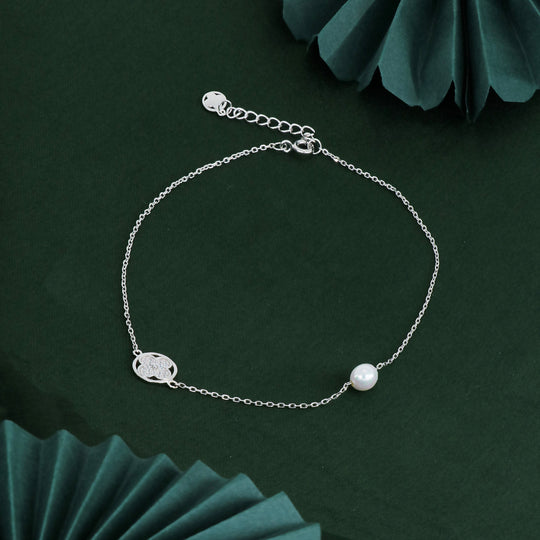
The lightest chain in the range and the easiest entry into solid silver.
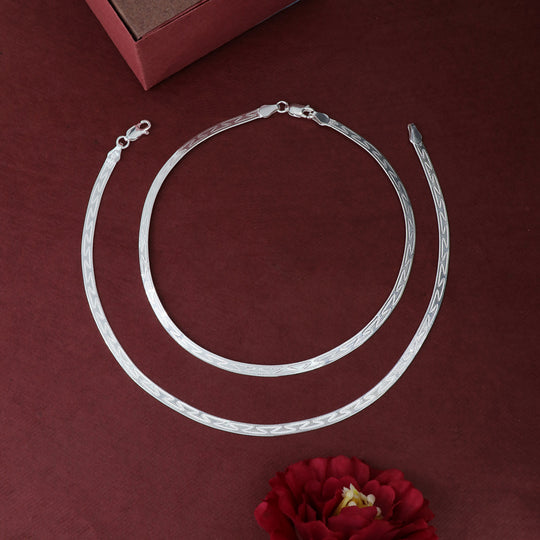
One of the heaviest pieces we make, and the weight is exactly what you are paying for.
The Two Families of Sterling Silver Anklets
Our collection is built around two series, and knowing which one suits you narrows the choice fast.
Chain anklets
Clean, link-based designs that sit flat around the ankle. This is the format closest to the traditional Indian payal, and it runs from barely-there daily chains through to heavy structured pieces. It is the easier family to wear with closed footwear.
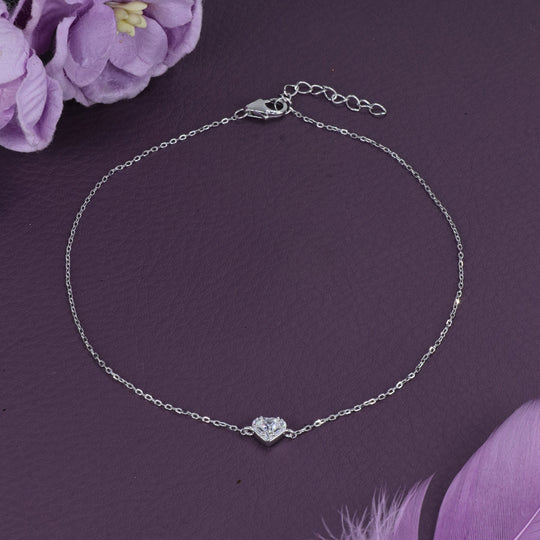
A textured link chain with more presence than a plain chain.
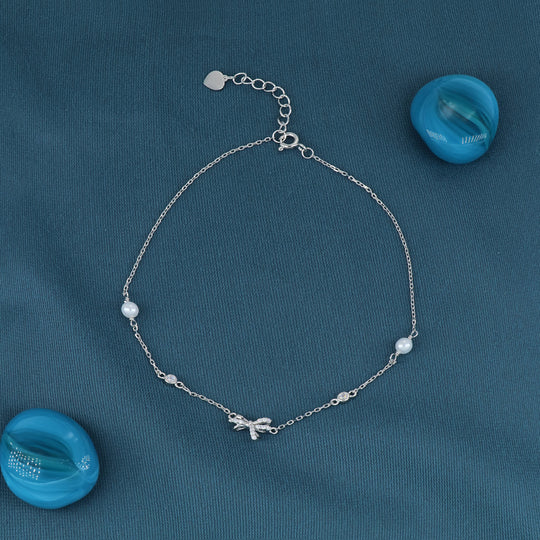
Mid-weight and polished, the usual pick for evening and festive wear.
Charm anklets
A base chain with charms attached, which move as you walk and create the soft sound associated with a payal. These suit gifting and occasions where a plain chain would feel too quiet.
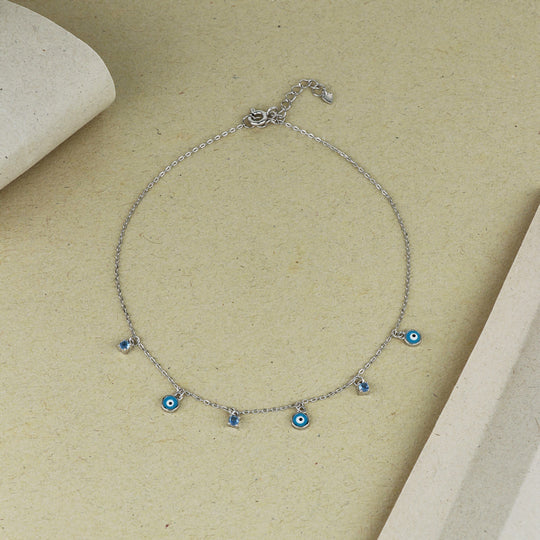
A light charm payal that works for festivals and everyday wear alike.
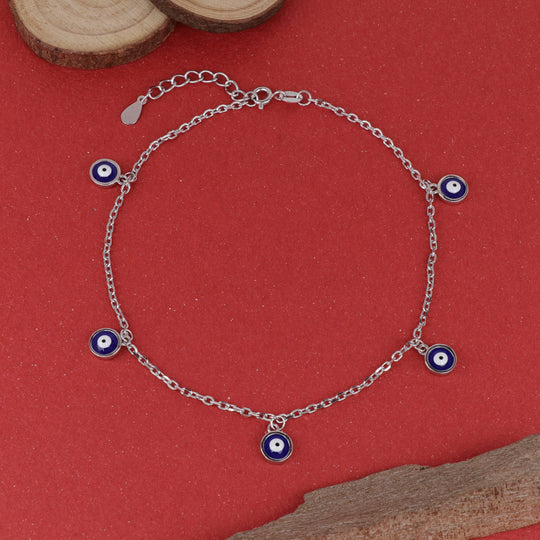
More charms, more silver, made for celebration days.
Getting the Size Right
A sterling silver anklet is an investment piece, so fit matters more than it would with something disposable. Measure just above the ankle bone with a soft tape, then decide how you want it to sit.
| Your ankle measures | For a close fit | For a relaxed drape |
|---|---|---|
| 8 inches | 8.5 inches | 9 inches |
| 9 inches | 9.5 inches | 10 inches |
| 10 inches | 10.5 inches | 11 inches |
| 11 inches | 11.5 inches | 12 inches |
- Close fit suits office wear, closed shoes and fine chains.
- Relaxed drape suits charm payals, open footwear and barefoot styling.
- Not sure? Choose an adjustable piece. Use the size filter on the Anklets page to see only adjustable designs.
If you would still rather check before ordering, our team answers sizing questions on WhatsApp through the contact page.
Is Sterling Silver Good for Daily Wear?
Yes, and this is one of the main reasons silver is the traditional metal for Indian anklets. It handles daily movement, it is comfortable in heat, and it suits most skin without reaction. A few practical points worth knowing:
- Water is fine, chemicals are not. A splash of water will not harm it. Chlorine, salt water and cleaning products will speed up tarnish.
- Tarnish is reversible. Dullness is a surface reaction, not damage.
- Clasps need checking. Give the clasp a quick look every few weeks, particularly on heavier pieces.
- Pairs wear evenly. If you wear a matching pair, rotate which foot gets which anklet so both age the same way.
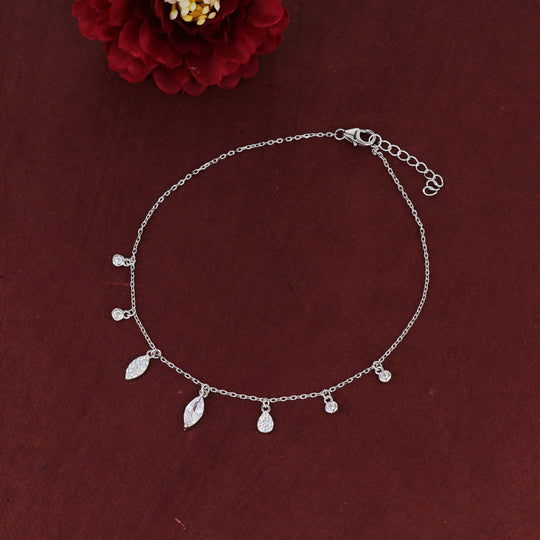
Light enough for daily wear, with just enough movement to be noticed.
How to Care for a Sterling Silver Anklet
The routine is simple and it works. Wipe the anklet with a soft dry cloth after each wear, make sure it is completely dry before it goes away, store each piece in its own pouch so chains do not scratch each other, and polish with a silver cloth when it starts to look flat. Put perfume and lotion on first, jewellery after. Our full care for jewellery guide covers the details.
Sterling Silver in Indian Anklet Tradition
There is a reason silver, not gold, became the standard metal for Indian anklets. In many households gold is reserved for the upper body and silver for the feet, a convention that has shaped how payal are made for generations. Silver also sits at a price point that allows a family to buy a proper pair at a birth, a wedding or a first festival without compromise.
The names change by region, including payal, pazeb, jhanjhar, nupur, pattilu and golusu, but the material stays consistent. A sterling silver payal is one of the few pieces of jewellery that genuinely moves between a toddler’s first anklets and a grandmother’s everyday pair. Our kid’s collection carries the smaller sizes for exactly that reason.
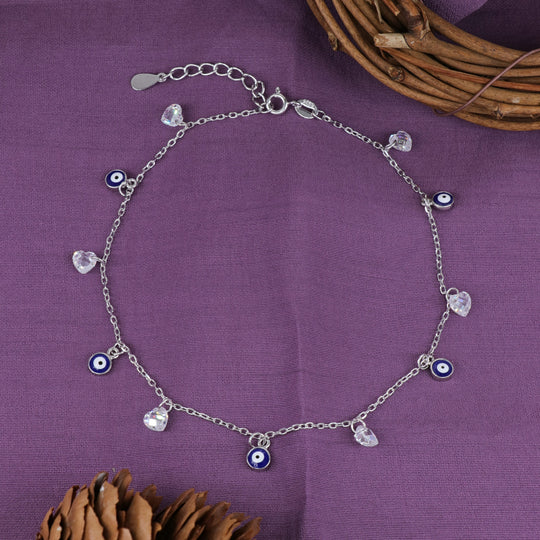
A traditional charm design in solid silver, suited to festive and ceremonial wear.
Before You Buy: A 7-Point Checklist
- Does the listing clearly state 925 sterling silver, not just “silver”?
- Is there a stamp or a written purity assurance?
- Does the price make sense against the weight of the piece?
- Is the size adjustable, or do you know your measurement?
- Does the clasp look sturdy enough for the weight of the chain?
- Is there a return policy if the fit is wrong? Ours is on the return and refund policy page.
- Do you know how long delivery takes? See the shipping policy.
Plush Silver manufactures its own jewellery, which is why every piece across our chains, bracelets, evil eye collection and anklets is solid 925 sterling silver with no plating. You can read more on our about us page.
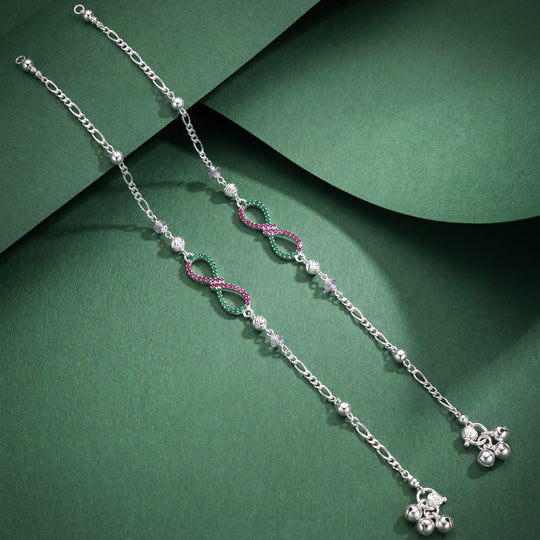
Stones set into solid silver, and our most popular gifting piece at 37% off.
Frequently Asked Questions
What are sterling silver anklets made of?
Sterling silver anklets are made from 925 sterling silver, which is 92.5% pure silver combined with 7.5% of another metal, usually copper, added to give the chain strength and hold its shape.
Are sterling silver anklets worth buying?
Yes, if you plan to wear the piece regularly. Solid 925 silver can be polished back to shine for years, while plated anklets lose their coating permanently and need replacing.
Do sterling silver anklets turn black?
They can tarnish over time through contact with air, moisture, perfume and sweat. This is normal for real silver and is not damage. A silver polishing cloth restores the shine.
Can I wear a sterling silver anklet in water?
A splash of water is fine. Avoid swimming pools, the sea and harsh soaps, since chlorine and salt accelerate tarnish and can dull the finish faster.
How do I know my anklet is 925 and not plated?
Look for a 925 stamp, check it is not attracted to a magnet, see whether the surface dulls evenly rather than flaking, and compare the price against the silver weight.
What size sterling silver anklet should I order?
Most women wear 9 to 11 inches. Measure above the ankle bone and add about half an inch for a close fit or an inch for a relaxed drape. Adjustable designs remove the guesswork.
Are sterling silver anklets safe for sensitive skin?
Generally yes. Solid 925 silver rarely causes reactions, unlike plated pieces where nickel or copper in the base metal can come through as the coating wears.
Can sterling silver anklets be worn every day?
Yes. Lightweight chain designs are built for it. Wipe the anklet dry after wear and take it off before swimming or using cleaning chemicals.
Do sterling silver anklets come in pairs?
Traditional styling uses a matching pair on both feet. Our anklets are sold individually, so you can order two of the same design for a traditional look or one for contemporary styling.


