


Anklet Meaning and Symbolism: What a Payal Has Always Stood For
Anklet Meaning and Symbolism: What a Payal Has Always Stood For
Ask three people what an anklet means and you will get three different answers. One will talk about marriage. One will repeat something they read about which ankle you wear it on. The third, usually someone’s grandmother, will tell you it is simply what a girl wears, and always has been.
All three are fragments of a much longer story. This guide sets out the real anklet meaning and symbolism: where the ornament came from, what it has signified across Indian tradition, what individual charms stand for, and which widely repeated claims have no basis at all. Every piece shown is from our Anklets collection in solid 925 silver.
A Short History of the Anklet
The anklet is one of the oldest ornaments humans have worn, and it predates most of the jewellery we take for granted today. Archaeological finds place anklets and toe rings in the Indus Valley thousands of years ago, where they were worn by girls and women as everyday adornment rather than as occasional jewellery.
Ancient Egypt had its own anklet tradition, with pieces worn across social classes and materials signalling status. In the twentieth century, the anklet also had a long run in American fashion, moving in and out of popularity for decades.
Why the ankle, of all places?
Three practical reasons explain its survival. The ankle is visible when you walk barefoot, which was the norm for most of human history. It moves constantly, so any ornament there catches light and attention. And metal at the ankle produces sound, which turned a piece of jewellery into something that could be heard before it was seen.
One Ornament, Many Names

In India, the anklet is not one tradition but many overlapping ones. The names change across the map, and each carries its own regional flavour.
What unites them is the material. Across almost every region, the anklet is silver. That consistency is itself part of the meaning, and it comes from a convention still followed in many households: gold for the upper body, silver for the feet.
What the Anklet Means in Indian Tradition
A marker of life stages

More than any other piece of Indian jewellery, the payal follows a person through life rather than appearing for one occasion.
A first pair is often gifted at birth or in the first year, which is why small sizes have always been made. Our kid’s collection exists for the same reason. Later it becomes everyday wear, then part of bridal jewellery, and eventually an heirloom passed down.
Sound as announcement, not decoration
The sound of a payal is the detail most often misread. In traditional households it served a social purpose: it announced that someone was approaching, giving others a moment to adjust. In joint families and in temple settings, that quiet warning was a courtesy, not a flourish.
It is also why the sound carries celebratory associations. In classical dance the ghungroo takes this to its conclusion, where the anklet stops being jewellery and becomes an instrument that marks rhythm.
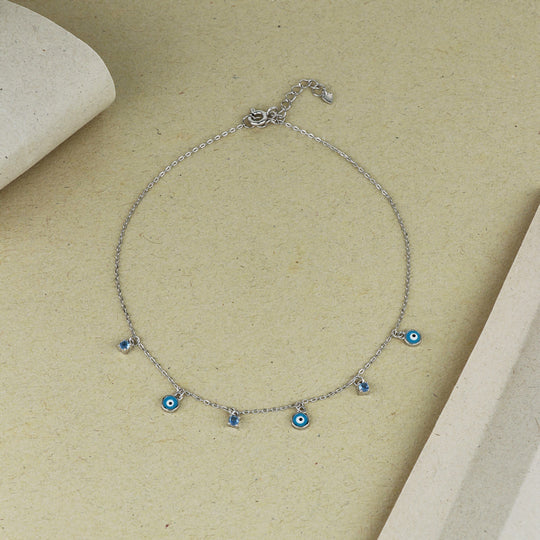
A classic charm payal, the style most associated with the traditional sound.
Part of solah shringar
In the sixteen adornments of a bride, the payal has a fixed place alongside the toe ring. Bridal anklets are deliberately heavier, because weight signals occasion. Many brides wear the pair with matching toe rings so the whole foot reads as one piece.
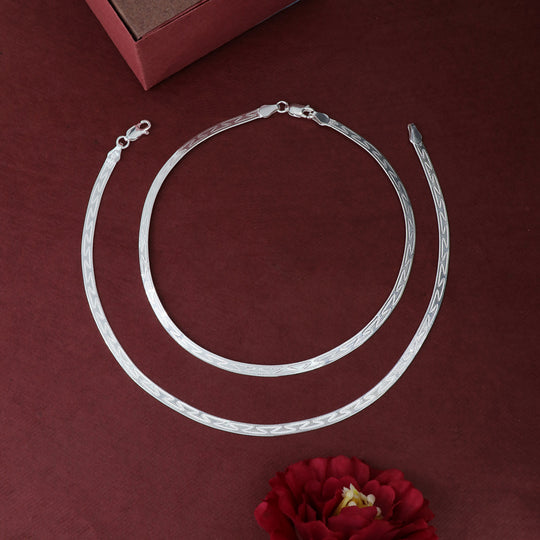
A heavy structured payal in the weight bridal styling traditionally calls for.
Why silver, and what silver itself signifies
Silver carries its own associations: it is linked with the moon, with coolness, and in Ayurvedic thinking with a calming quality. Practically, it is durable enough for daily wear and affordable enough that a family can buy a real pair rather than an imitation. Those two things together, meaning and accessibility, are why the tradition survived intact while other jewellery customs faded.
What Each Anklet Charm Symbolises
Charms are where personal meaning enters a piece. These associations are widely recognised, though they are cultural conventions rather than fixed rules.
Bells & Ghungroo
The oldest charm of all. Associated with celebration, festivity and the announcing function. Most often worn during festivals and at home.
Infinity Symbol
Endless love and unbroken connection. The most common choice when an anklet is given between friends, sisters or partners.
Evil Eye
Protection from envy and ill intent. Overlaps naturally with the Indian nazar tradition.
Coin & Disc
Prosperity and good fortune. Coin motifs appear across Indian jewellery and carry the same association of abundance.
Bead & Drop
Movement, playfulness and youth. Most often chosen for younger wearers and casual pieces.
Plain Chain
Continuity and daily ritual rather than occasion. The piece you forget you are wearing.
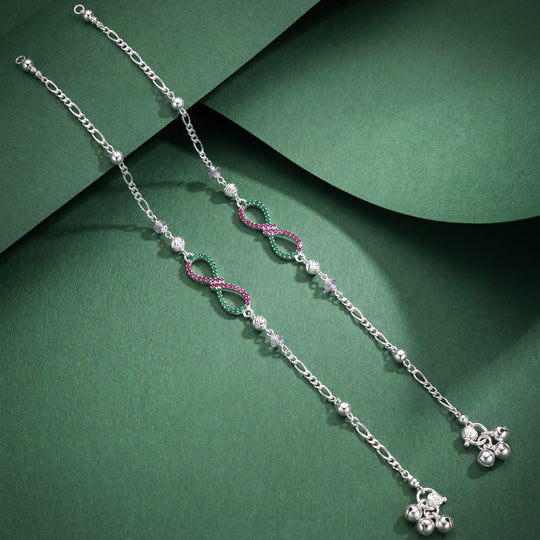
The infinity charm in solid silver with coloured stones, our most-gifted piece.
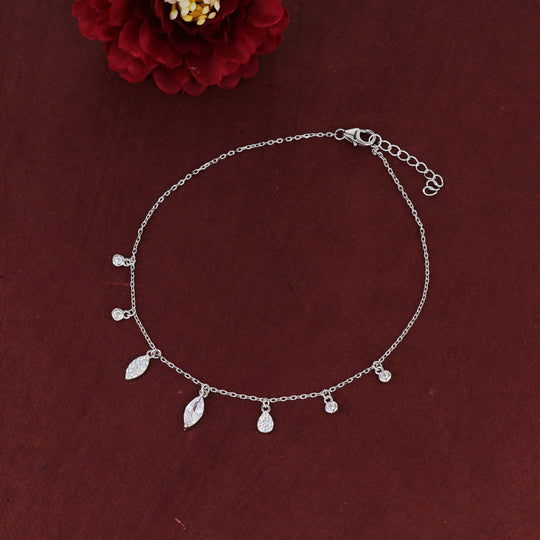
Drop charms that move as you walk, suited to everyday and casual wear.

A plain adjustable chain for daily wear, currently 64% off.
Which Ankle? Separating Custom from Myth
This is the single most searched question on the topic, and most of what circulates online is invented. Here is what is actually true.
The traditional Indian answer
Both ankles. A matching pair is the conventional form across most Indian communities, for daily wear and ceremony alike. A single anklet is a modern western styling choice rather than a traditional Indian one.
The modern answer
Either side. In contemporary styling there is no fixed rule, and most people simply choose the ankle that suits the outfit, the slit of a skirt or the hand they find easier to fasten a clasp with.
The claims that are not true
- “The left ankle means one thing and the right means another.” No consistent tradition supports this. Different sources contradict each other, which is the clearest sign that the rule was invented rather than inherited.
- “Only married women can wear anklets.” Untrue in practice and in tradition. Anklets are worn by infants, young girls, unmarried women, brides and grandmothers.
- “An anklet must be silver.” Silver is overwhelmingly the custom, and the preferred metal in most households, but it is a convention rather than a prohibition.
- “Anklets are only for traditional outfits.” The minimal chain has been standard daily jewellery for years now, worn with jeans and office wear as easily as with a saree.
If you encounter a confident claim about hidden anklet meanings, check whether anyone states where the custom comes from. Real traditions have a region, a community and a context attached. Invented ones never do.
Anklet Symbolism Around the World
| Region | What the anklet has signified |
|---|---|
| Indian subcontinent | Life stages, marital ceremony, auspiciousness, everyday adornment |
| Ancient Egypt | Adornment across classes, with material marking status |
| West Asia | Protection motifs, including the evil eye |
| Southeast Asia | Ceremonial and dance ornament |
| Modern West | Fashion jewellery, summer and beach styling, friendship gifts |
What is striking across all of these is how little the core idea changes. Wherever anklets appear, they mark something: a stage of life, a form of protection, a moment of celebration.
Why an Anklet Makes a Meaningful Gift
Because it carries a stated meaning, an anklet is one of the few pieces of jewellery where the gift explains itself. A few conventions that help:
- Infinity for a close friend, a sister or a partner.
- Evil eye for someone starting something new, a job, a move, a first child.
- Charm payal as a traditional gift at a naming ceremony, a first festival or a wedding.
- Plain chain when you want something they will wear every day rather than keep for occasions.
- Adjustable sizing removes the need to know the recipient’s ankle measurement.
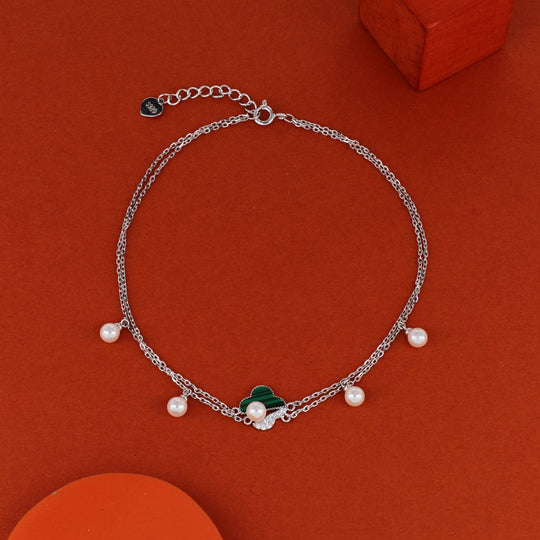
A charm design that reads as personal, which is what makes it gift-ready.
Current offers on gifting pieces are on our deals of the day page, and matching bracelets work well if you want to give a set.
Does Meaning Still Matter in 2026?
It does, though differently. Younger buyers are not choosing anklets to signal marital status. They are choosing them because a symbol feels better than a blank piece of metal, which is why infinity and evil eye charms consistently outsell purely decorative shapes.
What has survived unchanged is the material. Silver remains the metal of the Indian anklet, and solid 925 sterling silver is what makes a piece worth inheriting rather than replacing. You can read about how we make ours on our about us page.
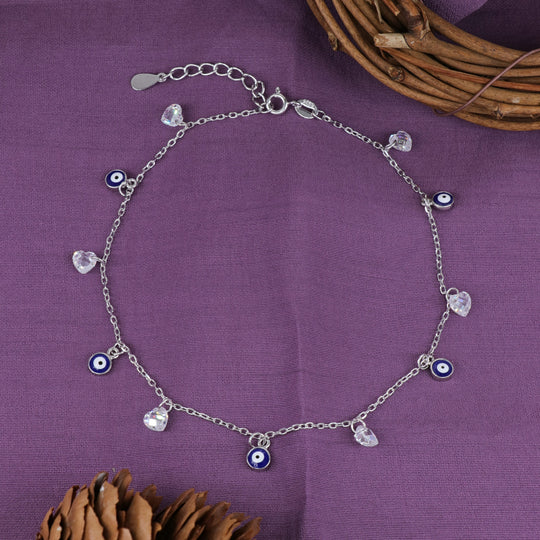
A traditional charm design in solid 925 silver, built to be passed on.
Caring for a Piece That Carries Meaning
Heirloom pieces need the least glamorous habits. Wipe the anklet dry after wear, store each piece separately so the chains do not scratch, and polish with a silver cloth when it dulls. Tarnish on real silver is a surface reaction, never damage, and it lifts off. Our care for jewellery guide has the full routine.
Frequently Asked Questions
What is the meaning of an anklet?
An anklet is traditionally a marker rather than a plain ornament. In Indian culture it signifies life stages and auspiciousness, is part of bridal solah shringar, and its sound has historically announced a person’s arrival. In modern styling it is worn as everyday jewellery with personal charm meanings.
What does an anklet symbolise in Indian culture?
It symbolises femininity, auspiciousness and celebration. The payal is gifted at birth, worn through childhood and daily life, and forms part of bridal jewellery alongside the toe ring.
Does the left or right ankle have a different meaning?
No. There is no consistent traditional meaning attached to either side. Indian custom favours a matching pair on both ankles, while modern styling treats a single anklet on either side as a free choice.
Can unmarried women wear anklets?
Yes. Anklets are worn by girls, unmarried women, brides and older women alike. The idea that they are reserved for married women is not supported by actual practice.
Why are Indian anklets made of silver?
Many households follow a convention of gold for the upper body and silver for the feet. Silver is also associated with the moon and with a cooling quality, and it is durable and affordable enough for a real pair rather than an imitation.
What does an infinity anklet symbolise?
Endless love and unbroken connection, which is why it is a common gift between partners, sisters and close friends.
What does an evil eye anklet mean?
Protection from envy and ill intent. The idea is shared across South Asia, West Asia and the Mediterranean, and it overlaps with the Indian nazar tradition.
Why do anklets make sound?
Charms and bells create sound as you walk. Traditionally this announced a person’s approach as a courtesy in joint family homes, and the same quality links the anklet to celebration and to classical dance through the ghungroo.
What is the difference between a payal and an anklet?
They are the same ornament. Payal is the common Indian name, usually for traditional charm designs, while anklet is the broader English term covering every style, including modern chains.


